Skip to content

Devrim KARABULUT

Narrow screen resolution Wide screen resolution Increase font size Decrease font size Default font size default color black color cyan color green color red color
Aizanoi'ye hoşgeldiniz
Çavdarhisar
Devamını oku...
 
Aizanoi
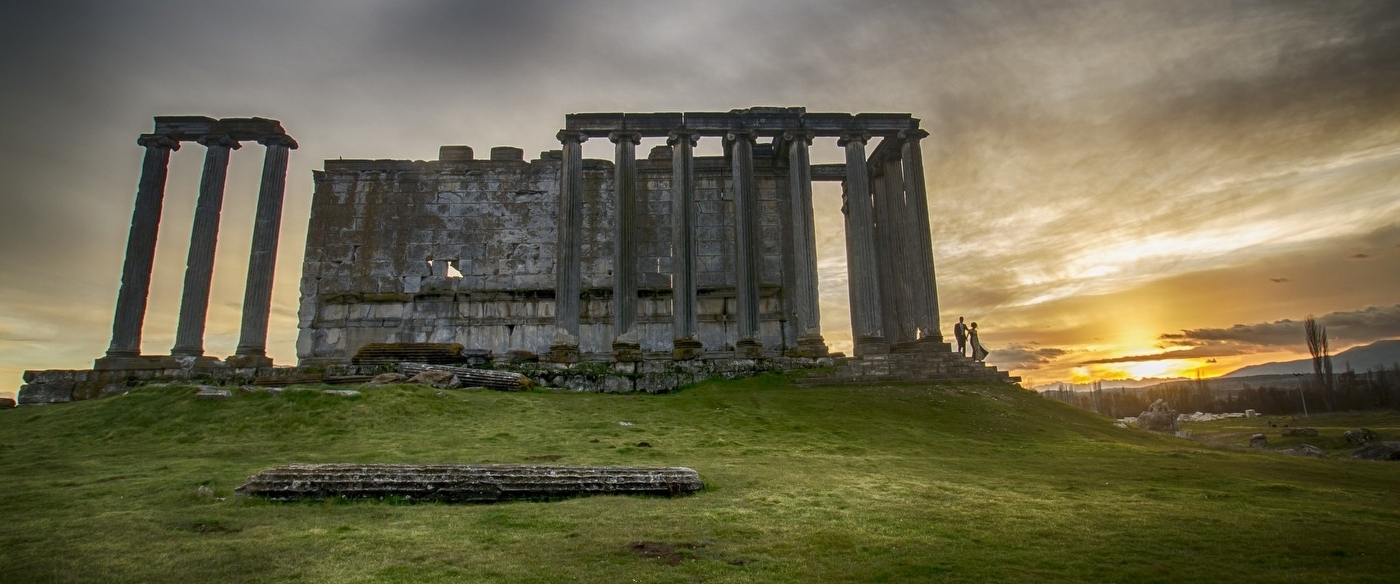
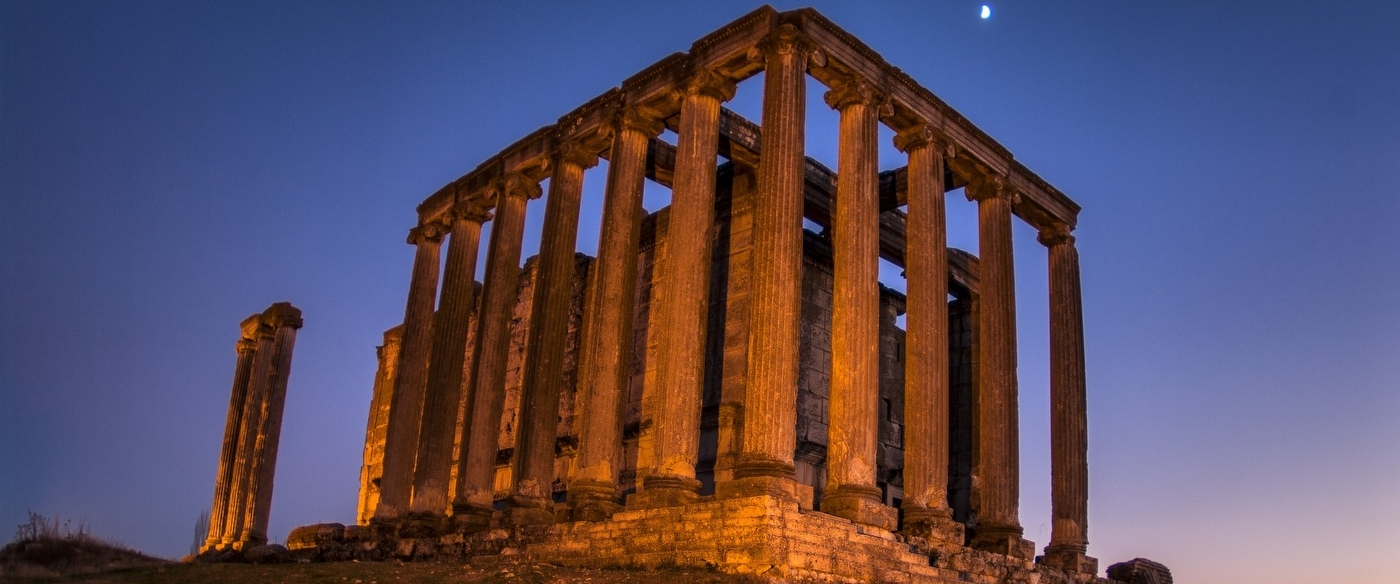
This city is in the Çavdarhisar township, 57 kilometers from Kutahya’s city center. The city experienced its golden age in the second and third centuries A.D. and became the center of episcopacy in the Byzantine era. The city has a temple built for Zeus which is the best-preserved temple in all of Anatolia. There is also a large theater and a stadium adjacent to theater. There are two Turkish-style baths, one of them decorated with mosaics, plus a gymnasium, five bridges on Kocacay which are still used today, an old dam, a trading building, avenues with columns on both sides, necropolis areas and the sacred cave of Meter Steune.Aizanoi
 
Historical research and monuments (Klaus Rheidt)
At the upper part of the Penkalas (Kocacay) River, there were Phrygians who lived around the sacred cave of the goddess Meter Steunene, who was the born through the union of the water nymph Erato and the mythological hero Azan. The city Aizanoi might have taken its name from Azan. Aizanoi was the main settlement of the Aizanitisians, who lived under the rule of the ancient Phrygians. Recent excavations done around the Temple of Zeus built on the high plateau of the city revealed several levels of settlements dating from as far back as 3000 B.C. In the Hellenistic era, this region was ruled by, alternately, Bergama and Bithynia, and in 133 B.C. it entered the dominion of the Roman Empire. Aizanoi printed its first coins in the second and first centuries. During the days of the Roman Empire, the town became rich from its production of grains, wine and wool. By the end of the first century, the town had started to turn into a city. It was the center of the episcopacy in the early Byzantine period but it lost its influence in the seventh century. During the time of the Seljuk Principality, Çavdar Tatars used this area as a military base in the 13th century. This is why this area was called Cavdarhisar ( “ hisar ” means city walls )Recent excavations done around the Temple of Zeus built on the high plateau of the city revealed several levels of settlements dating from as far back as 3000 B.C. In the Hellenistic era, this region was ruled by, alternately, Bergama and Bithynia, and in 133 B.C. it entered the dominion of the Roman Empire. Aizanoi printed its first coins in the second and first centuries. During the days of the Roman Empire, the town became rich from its production of grains, wine and wool. By the end of the first century, the town had started to turn into a city. It was the center of the episcopacy in the early Byzantine period but it lost its influence in the seventh century. During the time of the Seljuk Principality, Cavdar Tatars used this area as a military base in the 13th century. This is why this area was called Cavdarhisar (“hisar” means city walls). Aizanoi was rediscovered by European travellers in 1824 and studied in the 1830s and ‘40s. In 1926, M. Schede and D. Krecker started excavations under the auspices of the German Archaeology Institute. In 1970, R. Naumann began these studies anew, and they have continued to the present day.

The Temple of Zeus

Recent excavations have shown that layers of remains from the early years of the area were displaced to build the Temple of Zeus. Ceramic pieces dated to the Early Bronze Age were found at the level of the temple courtyard. The rubble from the removed layers was used to the fill temple area. The construction of the temple began in the second quarter of the second century. The money needed for the temple’s construction was met by renting out large temple fields. However, the people who rented these fields resisted paying any money for many years. The construction started only when the rents were paid under the instruction of Emperor Hadrian 

The correspondence between the city and the emperor on this subject was so important for Aizanoi that it rests in the northern side of the pronaos (front gallery) of the temple. On the outside of the same wall, there are long inscriptions. This inscription talks about M. Apuleius Eurycles, whom we know from the bridge inscription. On the cut stones of the temple, there are war scenes, horsemen and horses. These drawings depict scenes from the lives of Cavdars, who were looking for shelter in the city walls surrounding the temple in the 13th century. In the peristasis, there are eight Ionic columns on the short and 15 on the long sides. The distance between the interior structures of the temple (pronaos, cella and opisthodomos) is twice as large as the distance between the columns

 
Aizanoi' de Bahar

                                  Tarihle buluştuğunuz noktada, gelincikler arasında bir hayat : A İ Z A N O İ


                                                                       Resmi Büyütmek için tıklayınız

                                                        Resmi Büyütmek için tıklayınız      Resmi Büyütmek için tıklayınız


İÇİNDEKİLER

GİRİŞ FORMU

Grafik Hava Durumu

Türkiye Haritası

TV'de Bugün

www.aizanoi.com www.aizanoi.com - Anasayfa
TV'de Bugün

Günün Sözü

www.aizanoi.com www.aizanoi.com - Anasayfa

Ziyaretçi Sayısı

Bugün22
Dün33
Haftalık120
Aylık778
Bütün8417

(C) Fliesenstadt

Alan Adı Sorgulama

www.aizanoi.com www.aizanoi.com - Anasayfa
Domain Sorgulama Form'u
Domain:("http://www" girmeyiniz)

www.aizanoi.com www.aizanoi.com - Anasayfa